Organic Mattress Buying Guide
Naturepedic Chorus: Materials, Comfort, and Fit Considerations
An organic label can be a useful starting point when you’re shopping for a mattress, but it doesn’t tell the whole story. With the Naturepedic Chorus, a thoughtful evaluation means looking closely at the materials, construction, firmness, and fit details available for the exact model you’re considering—and then asking whether they suit your sleep habits.
A mattress is a personal purchase: the same surface that feels supportive and welcoming to one sleeper may feel too firm, too soft, or too warm to someone else. This guide lays out practical questions to help you assess the Chorus without relying on broad promises or assuming that a particular material guarantees a particular sleep experience.
Start with the details for the exact mattress
Product names can make a mattress sound familiar, while specifications quietly change across sizes, versions, or sales listings. Before comparing the Naturepedic Chorus with another organic mattress, find the current product page or specification sheet for the precise model you’re considering. Look for a materials list, layer description, firmness guidance, dimensions, care instructions, and the terms of the sleep trial and warranty.
It’s especially useful to distinguish a general brand statement from a model-specific detail. A company may offer multiple mattresses with different constructions; information about one model should not automatically be applied to another. If a retailer’s listing leaves out a detail that matters to you—such as the type of support core, the composition of a comfort layer, or whether a cover can be removed—check the manufacturer’s current information or ask the seller to confirm it in writing.
Think of this research as a way to replace assumptions with a clearer picture. “Organic,” “natural,” and “comfortable” are appealing words, but the buying decision becomes more grounded when you can connect each claim to a specific material, construction detail, certification, or policy.
What “organic” can—and cannot—tell you
For shoppers interested in organic mattresses, material sourcing and certification may be important parts of the decision. Yet the word “organic” on its own does not explain how an entire mattress is assembled, how firm it will feel, or whether it will suit your body and sleep position. Certifications apply to particular materials or processes under defined standards; they should be read in context rather than treated as a blanket guarantee about every part of a finished product.
When reviewing Naturepedic Chorus materials, check which components are named and whether the available documentation identifies the scope of any certification. Is a claim about the fabric, a fill, a layer, or the finished product? Does the product information explain the materials in the cover and comfort layers as well as the support structure? A precise answer helps you compare models more fairly than a general claim about being eco-conscious.
Also consider what you personally want from material choices. Some shoppers are focused on sourcing; others are trying to avoid a particular fiber, prefer a certain feel, or want more information about care and durability. There is no single checklist that suits everyone. The best comparison begins with your priorities and then tests whether the details published for the mattress meet them.
- Identify the materials listed for each layer, not just the outer cover.
- Check what any certification applies to and who issued it.
- Look for clear information about adhesives, barriers, and other construction components if these matter to you.
- Ask how to care for the mattress and what the warranty says about stains, wear, and acceptable support bases.
Construction is part of the comfort story
Materials influence a mattress, but they don’t work in isolation. Their thickness, arrangement, and relationship to the support core all contribute to how a surface feels. A plush cover, for instance, cannot by itself tell you how deeply a sleeper may settle into the mattress. Likewise, the name of a material does not reveal the firmness or responsiveness of the finished bed.
Read the Chorus construction description layer by layer, if that information is available. Note what sits closest to the sleeper, what provides the main support, and whether the design is described as responsive, contouring, or a combination. Treat those terms as useful prompts for questions rather than as a substitute for trying the mattress. “Responsive” may describe how readily a surface changes with movement, while “contouring” generally suggests a closer-feeling response; neither phrase predicts exactly how the bed will feel to every person.
Construction can also affect how easily you change position or share the bed. If you move frequently, pay attention to how quickly the surface responds when you shift. If you share a mattress, consider whether movement on one side is noticeable from the other. Published descriptions may offer clues, but your own comfort and the brand’s trial terms matter more than assuming that a category label guarantees a certain result.
Firmness, sleep position, and the feel you prefer
Comfort is individual, and firmness ratings are not universal measurements. One shopper’s “medium” may feel firmer or softer to someone else, depending on body shape, weight distribution, sleeping position, and personal preference. When assessing the Naturepedic Chorus, use any firmness description as an initial reference—not as a promise that the mattress will feel identical in your bedroom to how it sounds on a product page.
Your usual sleep position can help you decide what to investigate. Side sleepers often pay particular attention to pressure around the shoulder and hip, since a surface that feels too firm in those areas may become uncomfortable. Back sleepers may focus on whether the mattress feels supportive while still comfortable around the lower back. Stomach sleepers may want to consider whether the surface feels stable enough for their preferred position. Combination sleepers can ask how easy it is to turn and settle into a new position.
These are starting points, not rigid rules. People change positions during the night, and individual needs vary. A useful test is to spend enough time lying in your regular positions to notice whether you feel supported and comfortable, rather than judging the mattress from a quick press of a hand or a brief showroom visit. If shopping online, read the trial policy carefully so you know what testing at home involves.
It can help to describe your current sleep experience before shopping. Are you waking because your shoulders feel compressed? Do you prefer a gently cushioned surface or a more buoyant feel? Do you and a partner disagree about firmness? These observations make comparisons more meaningful than choosing based on a single adjective or review.
Temperature and the whole sleep environment
Sleep temperature is influenced by more than a mattress. Room temperature, pajamas, sheets, blankets, individual physiology, and the mattress protector can all shape how warm or cool the bed feels. When reviewing the Chorus, look for specific construction details related to breathability or temperature management, but be cautious about treating marketing language as a guarantee that a sleeper will stay cool.
Consider the bedding you already use, too. A thick topper or heavily insulated duvet may change the feel and warmth of a mattress. A protector can add a useful layer of spill protection, but its fabric and construction may also affect the surface sensation. For example, a quiet, stretch-fit waterproof mattress protector is described as designed to protect a mattress while maintaining a comfortable surface. Check its fit and care directions against your mattress dimensions and preferences before choosing it.
If you tend to sleep warm, assess the complete setup rather than expecting one material to solve every temperature concern. Breathable sheets, lighter covers, and a comfortable room environment may be just as relevant as the mattress itself. If you are sensitive to particular fibers or finishes, verify the full product information and ask the manufacturer questions that the listing does not answer.
Fit means more than mattress size
A good fit starts with the bed frame. Confirm the Chorus dimensions for your chosen size and compare them with your foundation or platform. Check any requirements for slats, center support, adjustable bases, or other support systems. A mattress needs a suitable base to perform as intended, and using an incompatible foundation may affect comfort or warranty coverage.
Measure the available space in the bedroom as well as the frame. Consider room to walk around the bed, open doors and drawers, and make the bed comfortably. If the mattress will be delivered upstairs or through a narrow hallway, check the delivery method and access requirements before ordering. Practical logistics can turn a seemingly simple purchase into a stressful one if they are left until delivery day.
Also think about who will use the mattress. Couples may want to compare preferences on firmness, motion, and temperature. A mattress that suits one person’s preferred sleeping position may not feel equally comfortable to a partner. If needs differ substantially, ask whether the available configuration offers any way to address them, and confirm the answer for the specific Chorus model rather than assuming customization is available.
For families shopping for a child, make sure any mattress and sleep setup follow applicable safety guidance for the child’s age and bed type. Adult mattresses and bedding should not automatically be treated as appropriate for an infant or crib. Confirm product dimensions and intended use, and consult relevant pediatric safe-sleep guidance when making decisions for an infant.
Care, durability, and ownership details
Mattress care is easier to plan when you know what the manufacturer recommends. Check whether the Chorus should be rotated, whether its cover is removable, and how spills or stains should be handled. Do not assume a cover can be machine washed simply because it has a zipper, or that a mattress can be flipped because it has two visible sides. Follow the current care instructions for the exact product.
A protector can help guard against spills and everyday soil, but it is not a substitute for proper care. Make sure it fits without stretching the mattress unnaturally or bunching beneath the sheet. If you use a topper, consider how it may alter the mattress feel and whether it could affect the clarity of your at-home comfort test.
Review the warranty and trial policy before you buy. Note how long the trial lasts, whether there is a minimum break-in period, what return or exchange fees may apply, and how pickup is arranged. For the warranty, check what is covered, what is excluded, and whether the mattress must be placed on a particular support system. A clear understanding of these terms makes the purchase less dependent on guesswork.
Comparing Chorus with another organic mattress
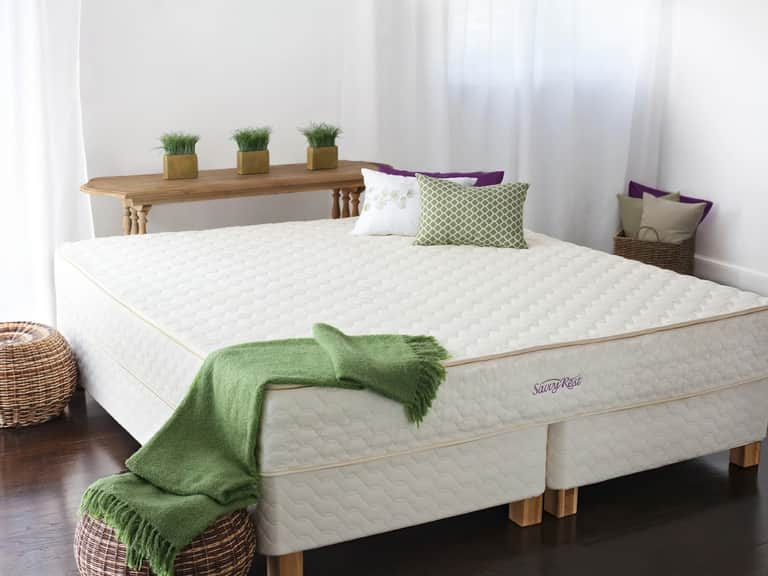
Comparisons are most helpful when they focus on real differences instead of broad labels. For example, the Savvy Rest Serenity Latex Mattress is described as a customizable latex design with three layers and choices of soft, medium, or firm Dunlop or Talalay latex. Its listed construction and customization options provide concrete points to compare with the Chorus—but they do not establish that one mattress is better for everyone.
Set the product information side by side. Compare the specific materials, layer arrangement, firmness choices, mattress height, support-base requirements, care directions, warranty, and trial terms. Then consider how each design relates to your preferences. A customizable mattress may appeal to someone who wants to select layers, while another shopper may prefer a simpler selection process. Those are different priorities, not a universal ranking.
Price should be considered alongside the full ownership picture. Include delivery, setup, removal of an old mattress, and any costs attached to returns or exchanges. A lower initial price is not automatically the best value if the policies or configuration do not suit your needs; similarly, a higher price does not guarantee a better personal fit.
A practical checklist before you decide
When you have narrowed your options, use a short checklist to make sure the most important questions have answers. This can also help keep an exciting purchase from being decided by a single appealing phrase.
- Materials: Have you reviewed the current, model-specific list of materials and the scope of any certification claims?
- Construction: Do you understand what the product information says about the comfort layers and support structure?
- Comfort: Have you considered your sleep position, firmness preference, and any pressure or support concerns?
- Temperature: Have you thought about your sheets, protector, blankets, and room environment as part of the overall setup?
- Fit: Are the mattress dimensions, frame, foundation, and delivery route compatible?
- Care: Do you know how the mattress should be cleaned, protected, and maintained?
- Policies: Have you read the trial, return, delivery, and warranty terms before placing an order?
The bottom line on the Naturepedic Chorus
The Naturepedic Chorus may be worth considering if you are exploring organic mattresses, but the right decision depends on more than the name or a broad materials claim. Review the current specifications for the exact model, understand what its construction and certifications refer to, and think carefully about firmness, sleep position, temperature, and bed-frame compatibility.
Most of all, separate what the product page can confirm from what only your own experience can answer. Published details help you understand materials, care, and policies; they cannot predict perfectly how your body will respond after several nights. A careful comparison, a suitable foundation, and a clear understanding of the home trial give you a more confident way to decide whether this mattress fits your needs.
Frequently asked questions
Does an organic mattress automatically feel different?
Not necessarily. Materials and construction may influence the feel, but comfort depends on the finished design and the individual sleeper. Compare the exact layers and firmness guidance rather than relying on the organic label to predict how a mattress will feel.
How can I tell whether the Chorus will suit my sleep position?
Use your usual position as a guide to what you should test: pressure relief for side sleeping, a comfortable sense of support for back sleeping, and a stable feel for stomach sleeping. Individual needs vary, so check the trial policy and evaluate the mattress at home if that option is available.
What should I check before ordering?
Confirm current materials and construction, mattress dimensions, foundation requirements, care instructions, delivery arrangements, and the full trial and warranty terms. These details help you judge both the sleep experience and the practical fit.